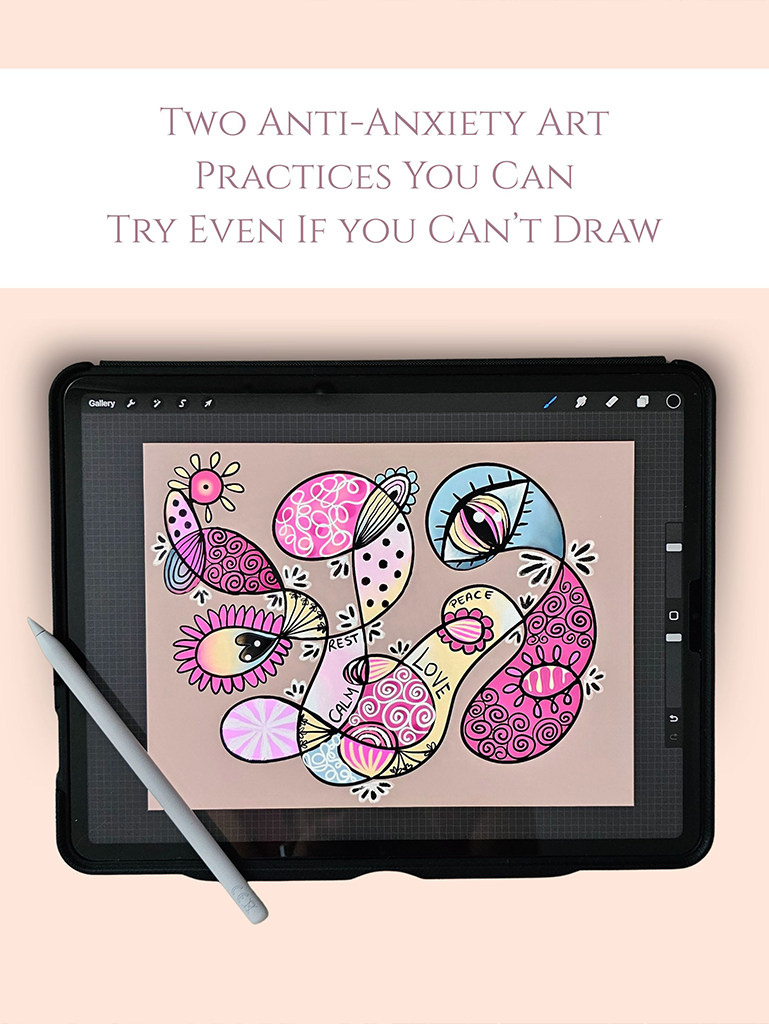
You probably already know the feeling. A long Zoom call, someone sharing their screen, and before you’ve even registered the thought, your hand is reaching for a pen. Not to take notes. Just to… move.
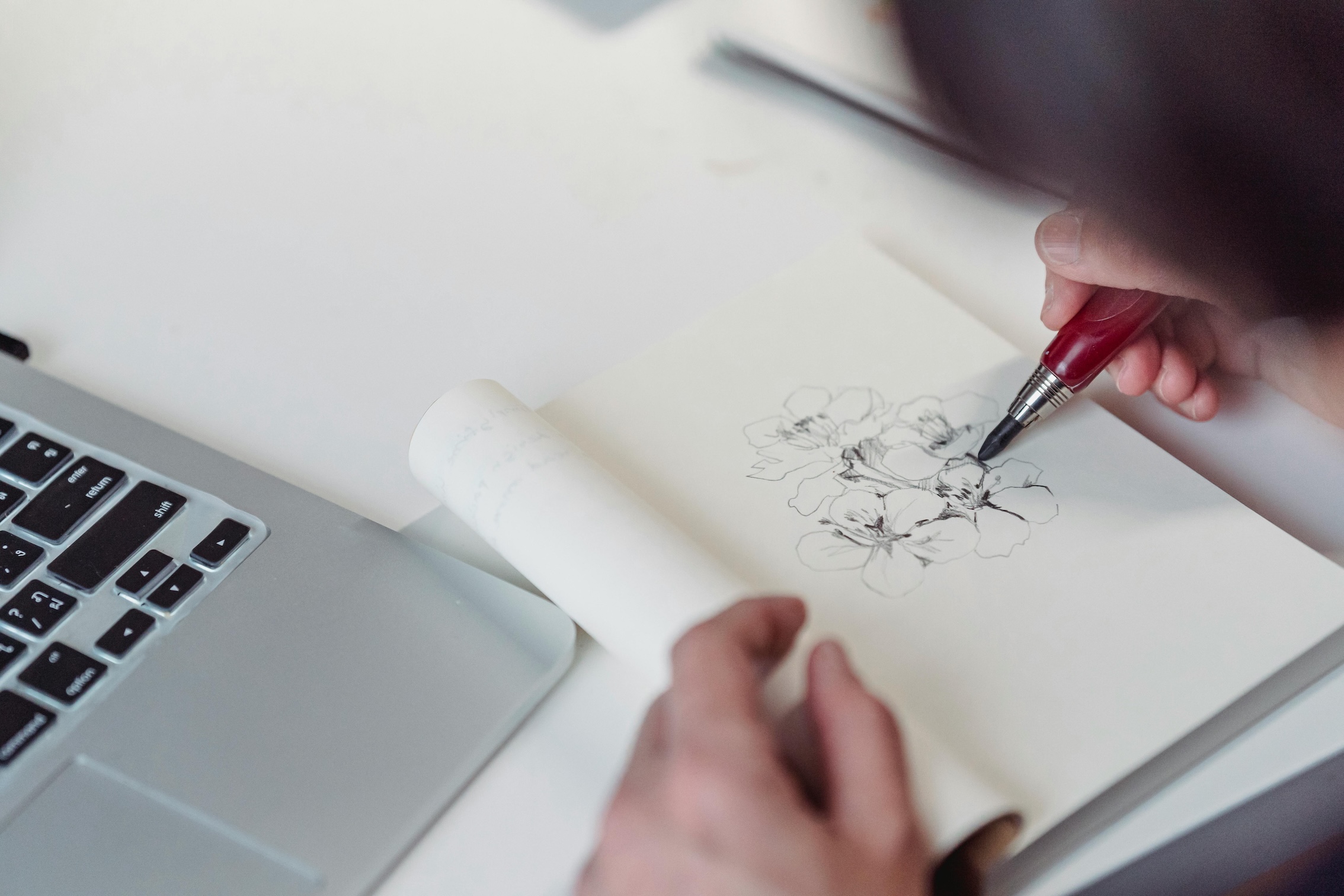
I do this all the time. During long online meetings or training sessions, I feel a pull towards my sketchbook almost instinctively. Something about keeping my hands busy helps quiet my mind — it feels easier to listen, to absorb, to actually stay there rather than drift somewhere else entirely. For years I thought this was just a quirky habit. Turns out, it might actually be one of the more intelligent things my brain has figured out how to do.

Doodling Has a Bad Reputation It Doesn’t Deserve
Historically, if a teacher spotted you doodling during a lesson, it meant one thing: you weren’t paying attention. The scribbling student was the distracted one, the daydreamer, the one not taking it seriously. But science is starting to tell a very different story.
Researchers in psychology and neuroscience have been quietly building a case for doodling — not as a sign of a wandering mind, but as something that might actually prevent one.
What the Research Says
1. Doodling Can Improve Memory Recall
The most often-cited study on doodling and the brain was conducted by psychologist Jackie Andrade at the University of Plymouth and published in the journal Applied Cognitive Psychology in 2009.
In her experiment, 40 participants listened to a monotonous mock telephone message and were asked to recall the names of people coming to a party. Half the group was assigned to doodle — specifically, to shade printed shapes — while listening. The doodling group performed better on the monitoring task and recalled 29% more information on a surprise memory test.
Twenty-nine percent. That’s a meaningful difference for something as simple as keeping a pen moving on paper.
The working theory behind why this happens is elegant in its simplicity: doodling takes just enough attention to keep the mind from wandering, but not so much as to be distracting — giving listeners a kind of “mental break” from the task of listening, while still keeping them anchored to it. In other words, your brain doesn’t zone out — it gets just enough to do so that it stays present for the thing that actually matters.
This is exactly what I experience. When my hands are still, my mind drifts. When they’re moving — even aimlessly — I find I absorb more.
2. It Keeps Your Brain Alert Without Overloading It
One of the more fascinating angles of this research is what doodling does at a neurological level. Doodling boosts blood flow through the prefrontal cortex — the area of the brain above your eyes that is linked to regulating our higher functions like thoughts, feelings, and actions.
The prefrontal cortex is essentially your brain’s command centre: it handles focus, decision-making, and filtering out irrelevant information. Anything that gently activates it without overwhelming it — like the repetitive motion of sketching — seems to help keep it ticking over during tasks that don’t naturally demand much from it, like sitting through a long meeting.
3. Art Making — Even Simple Scribbling — Can Lower Cortisol
This one is remarkable.
A study published in the journal Art Therapy by Girija Kaimal, Kendra Ray, and Juan Muniz at Drexel University investigated the effect of art making on cortisol levels — the hormone most associated with stress. 39 adults aged 18 to 59 took part in 45 minutes of art making, with cortisol levels measured before and after. Researchers found that 75% of participants’ cortisol levels lowered during their art-making session.
Here’s the part I love most: there was no correlation between past art experience and lower cortisol levels. It didn’t matter whether the participants were practised artists or had never picked up a paintbrush. The benefit was there regardless.
You don’t need talent to feel the calming effect of making something with your hands. You just need to show up and move the pen.
4. It Can Boost Mood — With a Gentle Caveat
Research also points to doodling as a mood-lifter, though with an interesting nuance worth knowing. Along with better creativity and memory, doodling can actually make you happier — but it depends on what you draw. A study in 2008 showed that the “venting” approach to doodling — furiously scribbling or drawing negative things — may relieve stress but won’t do much for your mood right away. Focusing on positive things, or things that make you happy, and drawing those can boost happiness.
Something to bear in mind if you find yourself stress-scrawling dark spirals during a particularly difficult meeting.
5. It May Be a Form of Mindfulness
Sunni Brown, author of The Doodle Revolution and a TED Talk speaker on the subject, has described doodling not as a distraction but as a form of meditation. She explains that doodling “is not a distraction, but a form of meditation or mindfulness” — it heightens awareness and observation, and the “thinking benefits” of doodling may actually relieve psychological stress, making it easier to relax, focus, and concentrate.
This resonates with me deeply. There’s a certain quietness that comes over you when your hand is moving — a gentle presence. Your attention narrows in a way that feels like relief. If you’re interested to try this for yourself I have a guided doodling exercise you might like, check it out here.
A Small Note on the Science
I want to be honest with you here, because I think it matters. While the studies above are genuinely exciting, the research field isn’t entirely unanimous. At least one study found that doodling neither reduced boredom or mind-wandering nor enhanced attention or retention compared to not doodling — which is a useful reminder that science is always an evolving conversation, not a settled verdict.
What we can say with reasonable confidence is: for many people, in many contexts, there is measurable evidence that doodling supports focus, reduces stress hormones, and can improve recall. And anecdotally, across creative communities and beyond, the experience of reaching for a pen during a long meeting and feeling more present for it — not less — is one a lot of us share.
So the Next Time You Reach for a Pen
Give yourself permission.
You’re not being rude. You’re not zoning out. You’re not failing to focus — you might actually be doing the opposite. Your brain, clever thing, has worked out that a little movement keeps it from floating away entirely.
For me, doodling has become a quiet ritual during long calls and trainings — not a distraction, but an anchor. I’m a surface pattern designer and illustrator by trade, so my doodles tend toward flowers and swirling botanicals. But it doesn’t need to be anything particular. Shaded squares. Repeated loops. Tiny spirals in the margins.
The research suggests it doesn’t matter what you draw. What matters is that you draw something — and that you stop feeling guilty for it.
If this resonates and you find yourself wanting to take that doodling instinct a little further, I’ve written about another simple, science-backed art practice that’s particularly good for anxious or overwhelmed days. It requires no skill, no plan, and barely any materials — just a quiet space and a willingness to slow down. You can read it here.
And if you’d like a gentle creative nudge to get started, my free 4-week pattern prompt guide is a great place to begin — no experience needed, just curiosity and a pen.
Happy doodling!
References
- Andrade, J. (2009). What does doodling do? Applied Cognitive Psychology, 24(1), 100–106. https://doi.org/10.1002/acp.1561
- Kaimal, G., Ray, K., & Muniz, J. (2016). Reduction of cortisol levels and participants’ responses following art making. Art Therapy: Journal of the American Art Therapy Association, 33(2), 74–80. https://doi.org/10.1080/07421656.2016.1166832
- Mueller, E. K. (2019). Note-taking for the win: Doodling does not reduce boredom or improve retention of lecture material. (Doctoral dissertation, University of Guelph). Published in PMC: https://pmc.ncbi.nlm.nih.gov/articles/PMC11295400/
- Brown, S. (2011). The Doodle Revolution. Portfolio/Penguin. TED Talk: https://www.ted.com/talks/sunni_brown_doodlers_unite
- Dean, J. (2023). Doodling: The mental benefits to focus, memory & concentration. PsyBlog. https://www.spring.org.uk/2023/01/doodling.php