Let’s talk about the thing every artist is thinking about but not everyone is saying out loud.
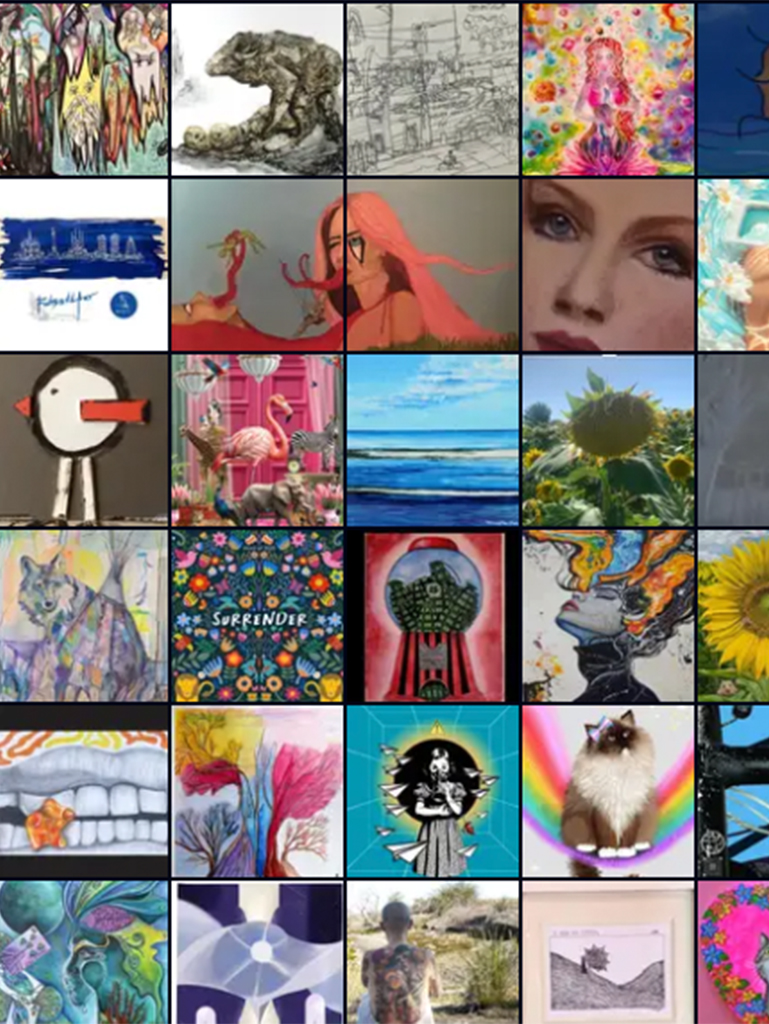
AI is here. It’s not going away. And if you’ve spent any time scrolling through design feeds lately, you’ve seen just how much generated imagery is flooding the internet — polished, fast, and free from the limitations of, well, being a human with a finite number of hours in the day.
It’s understandable if that feels unsettling. A lot of artists do find it unsettling.
But here’s the perspective shift I’d like to offer you today: the rise of AI-generated art might genuinely be one of the best things to ever happen to human-made creative work. Not despite the volume of what AI produces — because of it.
Stay with me.
First, Let’s Be Honest About What AI Can Actually Do
AI image tools are genuinely impressive. They can generate a competent surface pattern in seconds. They can iterate through hundreds of colourways before you’ve finished your morning coffee. They can produce work that, at a glance, looks professional and considered.
And yes, some of that work will sell. Some of it already does.
But here’s what AI cannot do — and this list matters:
It cannot have a point of view. AI generates by averaging. It produces the most statistically likely version of whatever you asked for, based on everything it’s been trained on. It has no opinions, no obsessions, no creative restlessness. It doesn’t lie awake thinking about the way light hits a particular shade of terracotta. You do.
It cannot have a story. Where did this pattern come from? What were you thinking about when you made it? What walk did you take, what book were you reading, what memory surfaced while you were sketching? These are the things that give creative work its depth — and they are entirely, irreducibly human.
It cannot build a relationship with a buyer. People don’t just buy patterns. They buy into a person. They follow a maker because they’re curious about how that person sees the world. They come back not just because they liked the last design, but because they trust where the next one is going.
It cannot grow, struggle, or surprise itself. Every artist knows the feeling of making something that turned out differently from what you planned — and better. AI doesn’t have accidents that become breakthroughs. It doesn’t have an off day that leads somewhere unexpected. It doesn’t evolve unless it’s retrained.
The Vinyl Record Principle
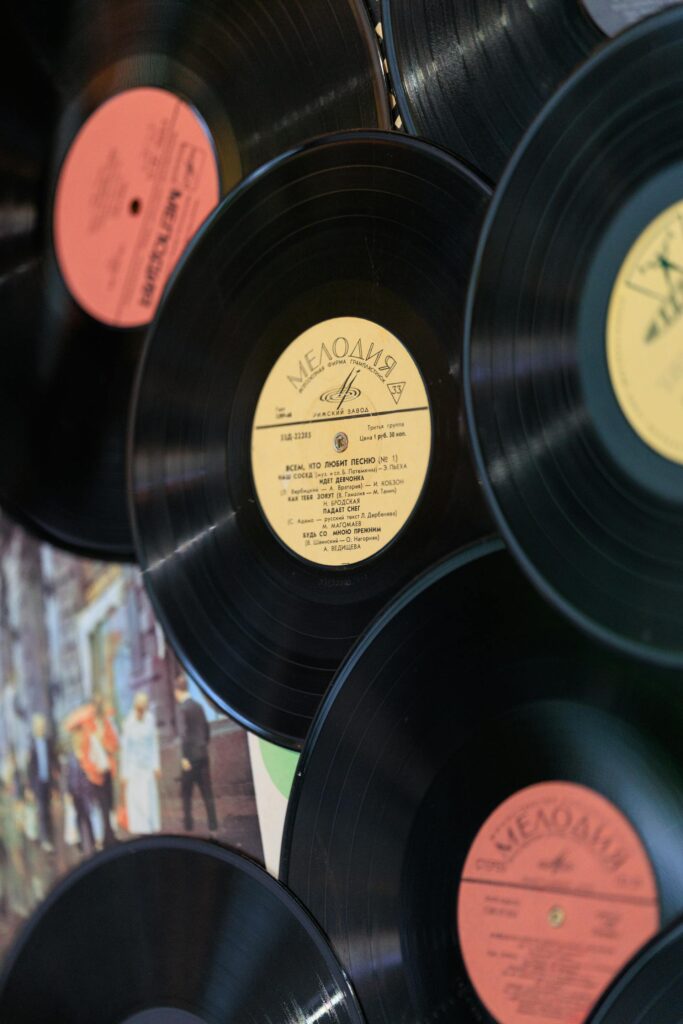
Here’s an analogy I find genuinely useful.
When digital music arrived, it was widely assumed that vinyl records would disappear. Why would anyone want a large, fragile, inconvenient format when you could have a perfect digital file in seconds?
And yet. Vinyl sales have grown for eighteen consecutive years. The global vinyl market is now worth billions. People don’t buy records instead of digital music — they buy them because digital music exists, because the contrast made them understand what they were missing. The warmth, the ritual, the physical act of choosing a record and placing the needle — these things became more meaningful, not less, once the frictionless alternative existed.
Human-made art is on the same trajectory.
The more AI-generated imagery floods our visual world, the more the handmade alternative stands out. Not just as a different aesthetic, but as a different category of thing. Something with provenance. Something that required a person’s time, attention, and creative investment. Something that cannot be replicated at scale.
Scarcity, as any economist will tell you, drives value.
I Use AI Too — Just Not in My Art
I want to be straightforward with you here, because I think honesty matters more than performing a purity I don’t actually have.
I use AI tools in my business. For writing first drafts of marketing copy, for scheduling, for generating stock imagery for mood boards and social posts. These tools save me real time on tasks that aren’t my creative work, which means I have more energy and more hours for the things that are.
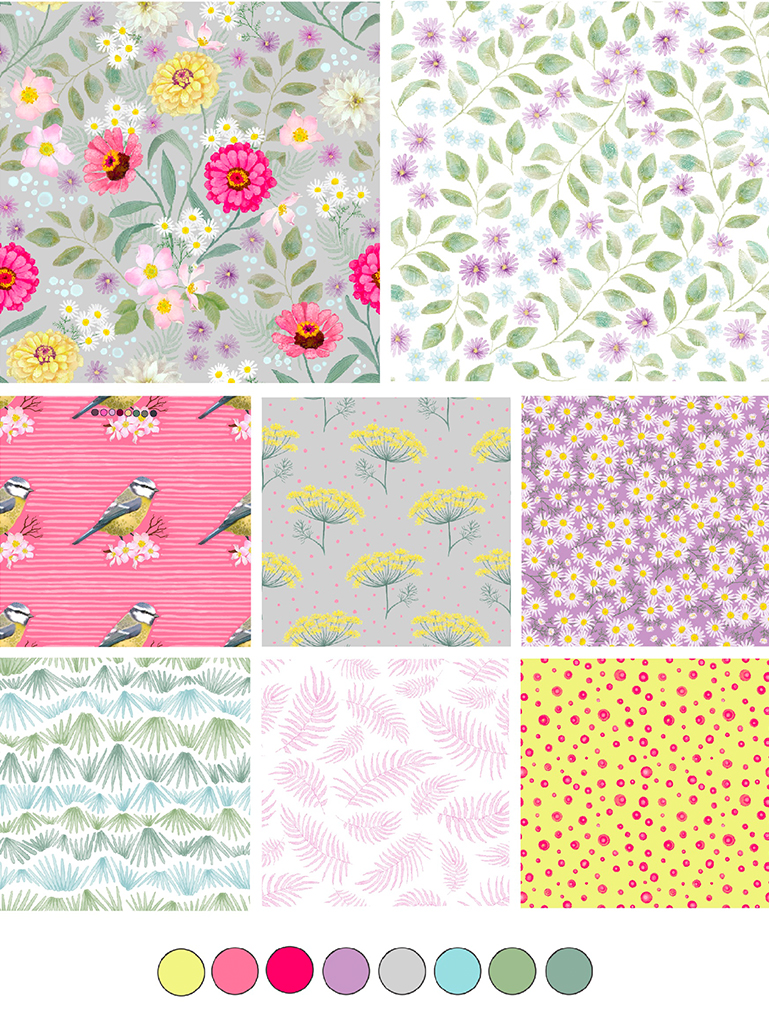
But I don’t use AI in my artistic process. Not because I think it’s wrong — I don’t, for the record — but because the work I make is the work I make. My patterns come from my sketchbooks, my colour instincts, my references, my hand. They’re born out of experiences I had, things and places that made me feel. They are a part of me and my story – how I see this strange, beautiful and sometimes challenging world. Showing that and having people connect with something that’s authentically me is one of the most gratifying part of being an artistThat’s not a moral position. It’s just what’s true for me.
And I think it’s worth naming this distinction clearly, because it’s one a lot of artists are navigating right now: there’s a difference between using AI as a business tool and using AI as a creative substitute. One frees you up to make more art. The other raises genuinely interesting questions about what your art actually is — questions only you can answer.
Neither answer is wrong. But they’re different answers, and they’re worth sitting with.
What “Human Premium” Means in Practice
There’s a phrase starting to circulate in creative business circles: the human premium. The idea that buyers will increasingly pay more — sometimes significantly more — for work they know was made by a person.
We’re already seeing this play out on Etsy and beyond. Buyers are asking more questions. Where did this come from? Did you make this yourself? Can I see your process? The interest in behind-the-scenes content, in studio snapshots, in the story of how a design came to be — this isn’t nostalgia. It’s due diligence. Buyers are learning to look for the human signal, because the absence of it is becoming easier to spot.
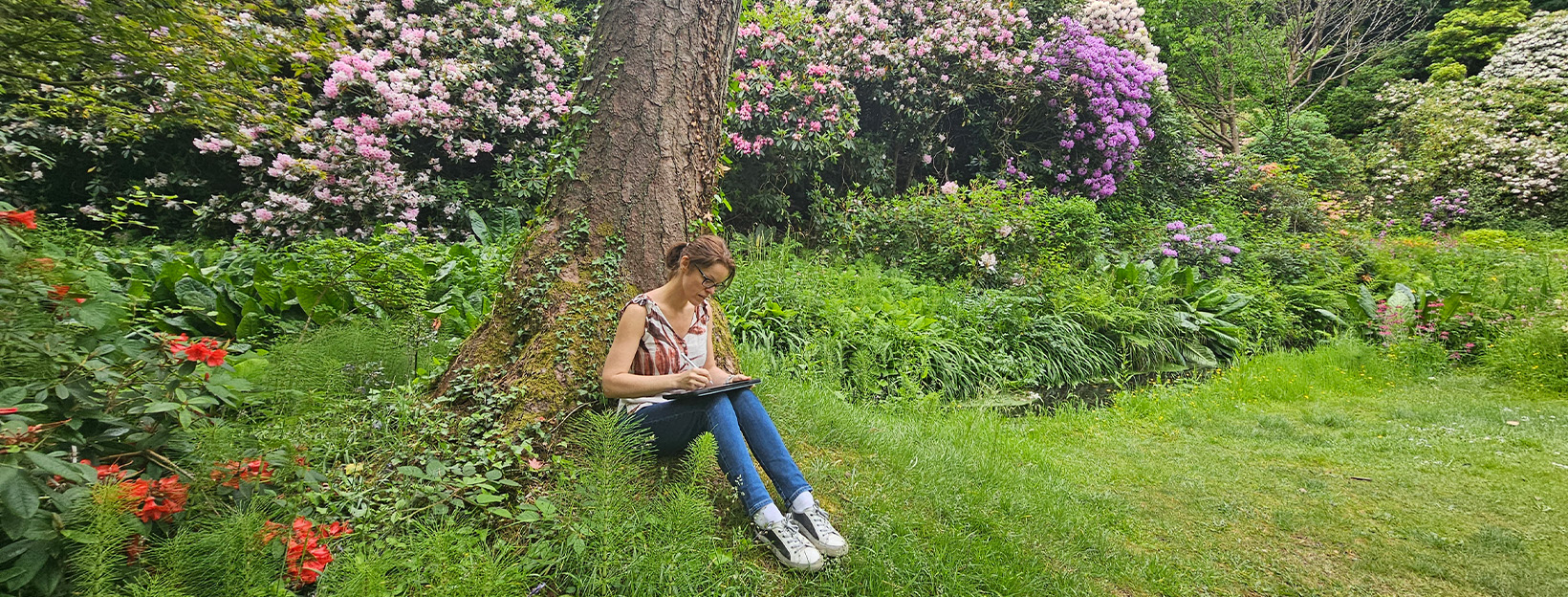
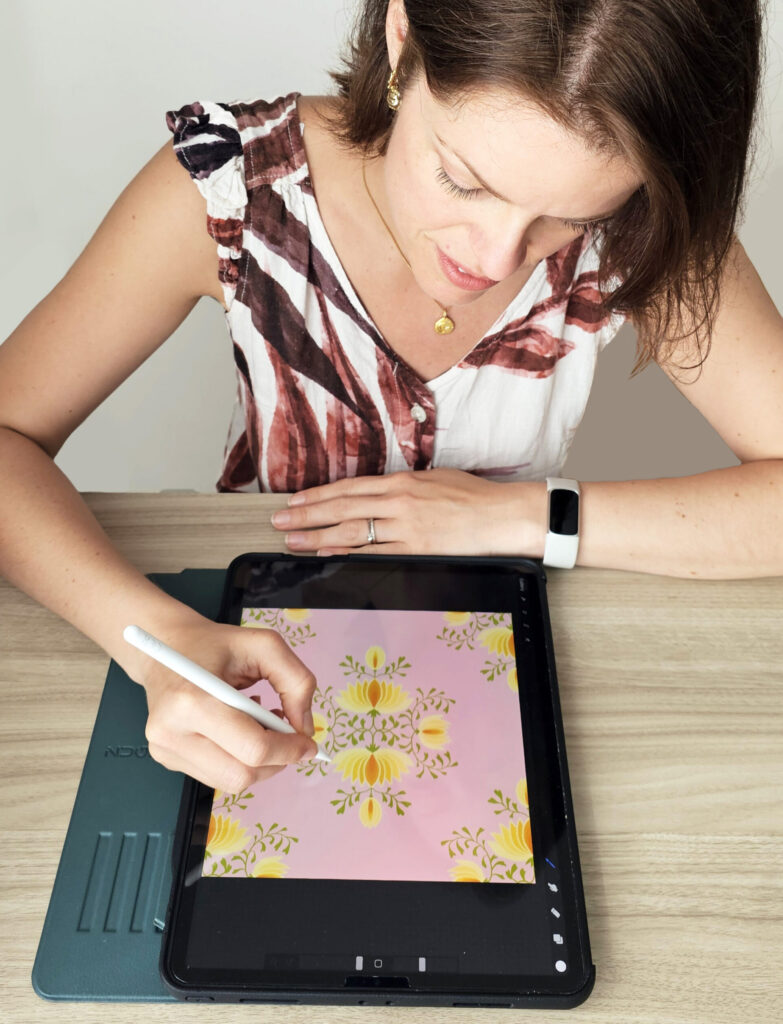
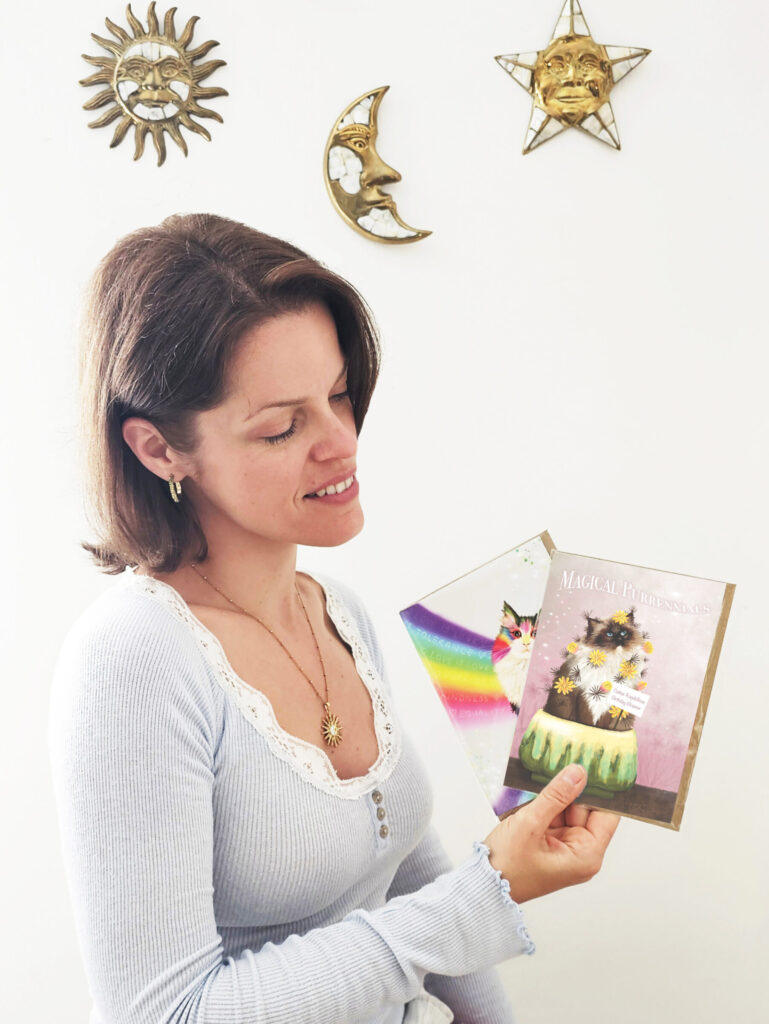
For artists, this is an invitation to be more visible, not less. Your process is part of your product now. The imperfect sketchbook page, the work-in-progress scan, the photo of your desk covered in colour swatches — these things are no longer just charming extras. They are evidence. They are the proof that a real person made this, and that proof is becoming genuinely valuable.
A few practical ways to lean into this:
- Tell the story behind the work. Not in a forced way — but when a collection or a pattern has a real origin, share it. The walk that inspired it, the object you were staring at, the feeling you were trying to capture. Buyers connect with specificity.
- Show your face and your hands. You don’t need a polished studio or a professional camera. A phone video of your hands sketching, a photo of your workspace mid-chaos, a time-lapse of a repeat coming together — these humanise your work in a way that no amount of beautiful product photography can.
- Be clear about your process in your listings. Simple, direct language: hand-drawn and digitised, painted in watercolour and scanned, designed entirely in Procreate — whatever is true. Transparency builds trust, and trust converts.
- Lean into your niche and your perspective. The more specific your creative voice, the less substitutable you are. AI can approximate a general aesthetic. It cannot approximate you.
The Bigger Picture
Here’s what I genuinely believe, and why I think it matters:
We are at the beginning of a long period in which the value of human creativity will be recalibrated — upward. Not because AI will go away, but because its presence makes human creativity more legible, more distinctive, and more worth seeking out.
The artists who will thrive are not necessarily the ones who resist every new tool, or the ones who adopt everything uncritically. They’re the ones who are clear about what their work is and where it comes from. Who invest in their creative voice rather than chasing a trend machine. Who understand that their particular way of seeing the world is not a commodity — it is, in fact, the whole point.
The flood of generated imagery isn’t erasing human art. It’s building the case for it.
Your job, as an artist, is to keep making the work that only you can make. And to make sure the people who are looking for exactly that can find you.
This is Part 2 of The Human-Made Advantage. If you haven’t read Part 1 yet — Why Your “Imperfect” Style Is Exactly What the World Needs Right Now — start there. The two pieces are designed to be read together.
If this resonated with you, I’d love to stay connected. Come find me on Instagram where I share work in progress, sketchbook peeks, and the honest reality of building a creative life — it’s the best place to see the ideas behind the ideas. And if you’d like thoughtful posts like this one landing quietly in your inbox, you’re very welcome to subscribe to my newsletter. No noise, no overwhelm — just creativity, pattern design, and the occasional behind-the-scenes moment from my studio. Thank you so much for being here and reading. It genuinely means a lot.